



Three Numbers That Determine the Right Replacement Chain
Every chainsaw chain is defined by three specifications. Get all three right and the chain fits perfectly; miss any one of them and the chain either won't install or will run dangerously loose. Before buying a replacement chain for any Stihl model, these are the numbers you need.
Pitch is the distance between three consecutive rivets divided by two, expressed in inches. Common Stihl pitches are .325", 3/8" LP (also written 3/8" Picco), 3/8", and .404". The pitch determines which chains are physically compatible with your bar and sprocket — a .325" chain cannot run on a 3/8" sprocket.
Gauge is the thickness of the drive links — the teeth that ride inside the guide bar groove. Standard Stihl gauges are .043" (1.1mm), .050" (1.3mm), .058" (1.5mm), and .063" (1.6mm). A chain with the wrong gauge will either bind in the bar groove or rattle loosely and throw off the saw.
Drive link count is simply the total number of drive links in the chain loop. This determines the chain's length and must match both your bar length and the specific bar model. Two bars of the same nominal length can require different drive link counts depending on the manufacturer.
All three values are stamped or printed on the guide bar itself — typically on the flat side near the mounting holes. The existing chain also carries a part number that encodes pitch and gauge. On Stihl chains, the marketing number format reads pitch code, chain type code, and drive link count in sequence, making it straightforward to order a direct replacement once you know the system.
Stihl Chain Pitch Options and What They're Used For
Stihl produces chainsaws across a wide power range, and the four pitch options map roughly to different segments of that range. Matching pitch to your actual use case — not just your saw model — produces better cutting results and longer chain life.
| Pitch | Also Known As | Typical Stihl Models | Best For |
|---|---|---|---|
| 3/8" LP | Picco, 3/8" Picco | MS 170, MS 180, MS 211 | Light homeowner use, pruning, small-diameter wood |
| .325" | — | MS 250, MS 251, MS 261 | General firewood cutting, mid-range residential and semi-pro use |
| 3/8" | Full 3/8" | MS 291, MS 362, MS 391, MS 461 | Professional felling, large-diameter hardwood, high-volume cutting |
| .404" | — | MS 661, MS 881, harvester heads | High-power professional and forestry applications |
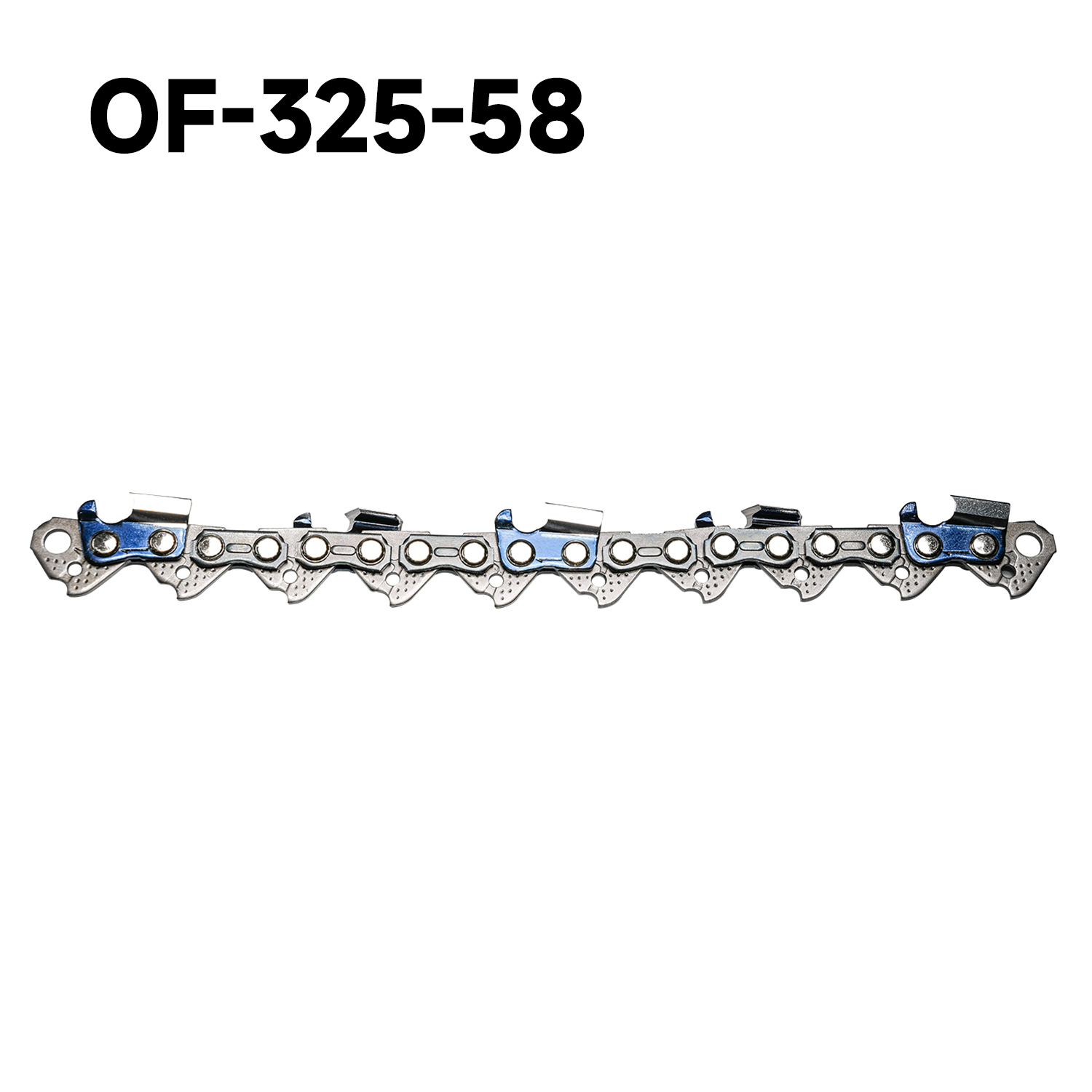
The 3/8" LP pitch is the most forgiving for occasional users — its smaller cutter spacing produces less vibration and lower kickback energy. The full 3/8" pitch, by contrast, removes material faster and handles higher-horsepower saws more efficiently, but demands more from both the operator and the saw's drive system. Chainsaw chains in .325 pitch for mid-range Stihl models occupy the middle ground — widely used for firewood production and property maintenance where cutting speed matters but professional-grade power isn't available. For heavy felling work on larger saws, 3/8-pitch chainsaw chains for professional-grade saws deliver the aggressive material removal that high-displacement engines require.
Understanding Stihl's Chain Type System
Once pitch is established, the chain type code in Stihl's marketing number system tells you the cutter geometry and intended application. This is where most buyers stop reading — and where the most meaningful performance differences lie.
Rapid Super (RS) uses full-chisel cutters with sharp square corners. It cuts fast and cleanly through dry hardwood but dulls quickly in dirty or sandy conditions and demands more from an experienced operator. This is the aggressive, high-performance option.
Rapid Micro (RM) uses semi-chisel cutters with rounded corners. It stays sharp longer than RS in abrasive conditions, tolerates occasional contact with soil, and is somewhat more forgiving on kickback — making it the standard choice for mixed hardwood cutting and general professional use.
Picco Micro (PM) is Stihl's 3/8" LP semi-chisel chain for smaller homeowner saws. It prioritizes low vibration and reduced kickback over raw cutting speed — appropriate for users who value safety and ease of handling over maximum throughput.
Picco Super (PS) is the full-chisel equivalent in the 3/8" LP pitch range, for homeowner users who need faster cutting and are comfortable with the trade-off in dulling rate and kickback potential.
The chain type also influences guide bar selection. Full-chisel chains running at high speeds generate more heat at the nose sprocket, so pairing them with a quality bar rated for the pitch and gauge matters. Chainsaw guide bars compatible with Stihl specifications should be matched to the chain's pitch, gauge, and groove depth — not simply to bar length alone.
Low-Kickback vs Full-Chisel Chains: Choosing Based on Safety and Performance
Kickback — the sudden rotational snap of the saw toward the operator when the upper nose of the bar contacts wood unexpectedly — is the leading cause of serious chainsaw injuries. Chain design has a direct and well-documented effect on kickback severity.
The U.S. Consumer Product Safety Commission has noted that low-kickback replacement chains can substantially reduce kickback injury risk when fitted to saws that lack modern safety features. The ANSI/OPEI B175.1 standard — the governing safety specification for hand-held chainsaws in North America — defines kickback energy limits and requires that compliant low-kickback chains be marked accordingly.
Stihl uses a color-coded tie strap system to communicate this clearly on the chain itself. Green tie straps identify low-kickback chains that meet the ANSI B175.1 standard. These are appropriate for all users and are the recommended default for anyone without specialized training. Yellow tie straps mark chains with higher kickback potential — intended only for experienced operators who require the additional cutting aggression and have training to manage the associated risk.
| Feature | Low-Kickback Chain (Green) | Standard / Full-Chisel Chain (Yellow) |
|---|---|---|
| ANSI B175.1 compliant | Yes | No |
| Kickback energy | Reduced | Higher |
| Cutting speed | Moderate | Faster |
| Recommended users | All users, including beginners | Experienced professionals only |
| Typical chain types | PM, RM series | RS, PS series |
For most replacement chain purchases — whether for homeowner saws or general-purpose professional models — a low-kickback chain is the appropriate baseline. Upgrading to a full-chisel chain only makes sense when cutting speed is a genuine operational requirement and the operator has the training to work safely with higher kickback risk.
OEM vs Compatible Replacement Chains
Stihl produces its own chains and sells them exclusively through authorized dealers. This channel is reliable but limits pricing flexibility and availability, particularly for high-volume users who need to keep multiple chains on hand for extended cutting sessions.
Compatible replacement chains — manufactured to the same pitch, gauge, and drive link specifications as OEM chains — offer a practical alternative when specifications are matched correctly. The critical point is that compatibility is entirely determined by the three numbers discussed in the first section. A chain with the correct pitch, gauge, and drive link count will fit and run correctly regardless of brand. Chain quality, however, varies considerably between manufacturers.
When evaluating compatible chains, look for chains manufactured from alloy steel with hardened cutters and rivets, consistent drive link height (variation here causes uneven wear on the bar groove), and appropriate cutter geometry for the intended application. Chains that meet ANSI B175.1 for low-kickback applications should carry documentation confirming that compliance — not just a marketing claim on packaging.
For purchasing managers or contractors sourcing replacement chains at volume, working with a manufacturer that can confirm specifications against your existing OEM chain data — pitch, gauge, drive links, cutter type — reduces the risk of fitment errors. Exploring the full range of replacement chainsaw chains available across all common Stihl-compatible pitches and gauges allows for direct specification matching before ordering.
Signs Your Stihl Chain Needs Replacing
A worn chain doesn't just cut slower — it places additional load on the saw's engine and drive system, accelerates bar groove wear, and increases the operator effort required to guide cuts. Recognizing the right replacement point protects both the equipment and the person using it.
The most reliable indicator is cutter length. Each cutter has a depth gauge (raker) in front of it that controls how aggressively the cutter bites into wood. As the chain is sharpened repeatedly, the cutting edge shortens. Most chains should be replaced when the cutter has been sharpened down to approximately 4mm in length — at this point, the geometry that makes the chain cut efficiently is largely gone and further sharpening produces diminishing returns.
Drive link wear is the second sign. The drive links ride in the bar groove and gradually wear the groove wider. If a chain has developed visible rocking play when seated in the bar — detectable by moving the chain laterally — the drive links are worn beyond the point where they can maintain straight tracking. A stretched or worn chain running on a worn bar is a safety hazard.
Tension that won't hold is another indicator. A chain that requires frequent re-tensioning during normal operation has stretched past its serviceable limit. Some stretch is normal when a new chain is broken in; ongoing stretch on an established chain points to elongated or cracked rivets.
For a detailed breakdown of wear patterns and the specific wear indicators to monitor on each chain component, the guidance on chainsaw chain wear and when to replace covers the full inspection process. Replacing a chain at the right time — rather than running it until it fails — is the lowest-cost maintenance decision available to any chainsaw operator.

