



Every cut a chainsaw makes passes through the guide bar before it reaches wood. That single component — the long, flat metal rail extending from the saw body — determines how straight the cut runs, how much strain the engine absorbs, and how safely the operator can control the tool under load. Choosing the wrong guide bar, or running a worn one past its service life, degrades all three of those outcomes at once. Understanding how guide bars work, what types exist, and how to match one to your saw and your work is foundational chainsaw knowledge regardless of experience level.
What a Chainsaw Guide Bar Does and Why It Matters
The guide bar serves as the structural rail along which the cutting chain travels. It supports the chain under lateral load during the cut, keeps the chain tracking in a straight line, and — through the bar's oil groove — delivers continuous lubrication to the chain as it moves. Without a functional guide bar, the chain has no controlled path and no consistent friction reduction, making precise cutting impossible and safe operation unlikely.
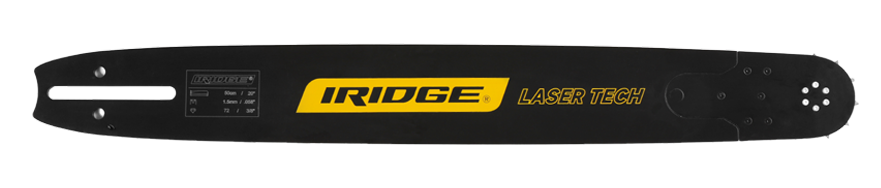
A guide bar's anatomy is more specific than it appears from the outside. The tail section fits into the saw's powerhead and is clamped by the side plate. The mounting slot — an elongated hole running along the tail — allows the bar to slide forward or backward for chain tension adjustment. The adjuster hole accepts the tensioning pin, and the oil outlet hole on the underside of the bar connects to the saw's automatic oiling system, feeding lubricant into the chain groove during operation.
The condition of every one of these features affects performance. A blocked oil outlet starves the chain of lubrication. A worn mounting slot allows the bar to shift under load, producing uneven cuts. A damaged nose changes how the chain enters and exits a cut — introducing the lateral forces that cause kickback. OSHA's chainsaw parts safety standards require that chainsaws placed into service meet defined requirements for chain control and guidance — requirements that the guide bar's integrity directly supports.
The Three Main Types of Chainsaw Guide Bars
Guide bar design has evolved around three distinct constructions, each optimized for different use profiles. Selecting among them is not primarily a cost decision — it is a performance and durability match to the type of work being done.
| Bar Type | Construction | Strengths | Best Applications |
|---|---|---|---|
| Hardnose (Solid Nose) | Single-piece solid steel, fixed nose tip | Maximum durability; no moving parts at nose; handles abrasive cutting conditions | Milling, dirty wood, rocky environments, high-production forestry |
| Replaceable Sprocket Nose | Steel body with a replaceable bearing and sprocket at the nose tip | Reduced chain friction; smoother chain travel; sprocket replaceable independently | General professional use, arboriculture, sustained cutting cycles |
| Laminated | Multiple steel layers bonded together with a hardened outer rail | Lighter weight than solid bars; good strength-to-weight ratio | Residential use, homeowner saws, occasional cutting tasks |
The hardnose guide bar for demanding heavy-duty cutting is the choice for conditions where a rotating sprocket nose would be exposed to dirt, grit, sand, or embedded debris — abrasive materials that rapidly destroy sprocket bearings but have minimal effect on a solid steel tip. Milling operations, working in sandy soil environments, or cutting reclaimed timber with potential metal inclusions all call for a hardnose.
The replaceable sprocket nose guide bar for reduced friction is the most widely used type in professional arborist and forestry work. The sprocket at the nose tip rotates with the chain rather than against it, eliminating the sliding friction that builds heat at the nose of a hardnose bar during sustained cutting. When the sprocket bearing eventually wears, it can be pressed out and replaced without retiring the entire bar — a significant cost advantage over long service cycles.
The laminated guide bar combining strength and light weight uses a bonded multi-layer construction that reduces overall bar mass compared to a solid equivalent at the same length. For homeowner saws and occasional use applications, the weight reduction improves handling without compromising the structural integrity required for the cutting loads involved.
How to Choose the Right Bar Length
Bar length in the context of chainsaw guide bars refers specifically to the effective cutting length — the distance from where the bar exits the saw body to the tip. This is the measurement that matters for cutting capacity, not the bar's total physical length including the tail section.
The practical rule for matching bar length to the work is straightforward: the effective bar length should be at least two inches greater than the diameter of the wood being cut. This allows the chain to complete a full pass through the material in a single stroke rather than requiring the operator to reposition mid-cut. A bar that is too short for the log forces the saw into multiple bite-and-reposition sequences that increase effort and reduce cut quality.
Common effective length ranges map to user profiles as follows:
- 10–14 inches: Compact and pruning saws; limbing small branches, pruning work, light residential use
- 16–18 inches: The most common range for homeowner gas and battery chainsaws; firewood cutting, clearing, small tree felling
- 20–24 inches: Mid-range professional saws; arborist work, general tree felling up to medium diameter
- 25–36 inches and above: High-displacement professional and milling saws; large timber felling, chainsaw milling operations
Bar length and engine power are directly linked. Running a bar that is significantly longer than the saw's power output can sustain places the engine under continuous overload — reducing chain speed, accelerating wear, and increasing the risk of chain pinching in the cut. Always verify that a replacement bar length falls within the range specified in the saw's owner manual before ordering.
Key Specifications: Pitch, Gauge, and Drive Links
Three specifications must align between the guide bar and the chainsaw chain for the system to function correctly. Installing a chain that does not match the bar on any of these three dimensions will either prevent assembly or cause rapid, destructive wear to both components.
- Pitch: The distance between any three consecutive rivets on the chain, divided by two. Common pitch values are 3/8 LP (low profile), .325, 3/8, and .404 inch. The bar's nose sprocket — or hardnose geometry — is machined for a specific pitch, and a chain with a different pitch will not seat correctly.
- Gauge: The width of the chain's drive links, which must match the width of the bar's groove. Common gauge values are 0.043, 0.050, 0.058, and 0.063 inch. A chain that is too narrow rocks in the groove; too wide and it will not fit. Either condition causes immediate, severe wear to both bar and chain.
- Drive link count: The total number of drive links in the chain must match the bar length. A chain with too few links will not reach around the bar; too many and it will be impossible to achieve correct tension. This count is specific to each bar length and pitch combination.
All three values are typically stamped or labeled on the bar itself, and they must be cross-referenced against the chain specification before purchasing replacements. The simplest approach is to match a chainsaw chain matched to your guide bar specifications using the existing bar's stamped values as the reference — eliminating guesswork on any of the three critical dimensions.
Guide Bar Maintenance: What to Do and How Often
A guide bar that is regularly maintained outlasts a neglected one by a significant margin — and performs more safely throughout its service life. The maintenance tasks are simple and add only a few minutes to the refueling and sharpening routine.
- Clean the oil groove: The bar's lubrication groove accumulates sawdust compacted with bar oil, eventually blocking oil flow to the chain. Use a thin tool — a pick, a piece of wire, or a dedicated bar groove cleaner — to clear this channel every time the chain is removed for sharpening or replacement.
- Clear the oil inlet hole: The small hole on the underside of the bar tail that connects to the saw's oiling system should be checked for blockage at each cleaning. A blocked inlet means the chain runs dry regardless of how much oil is in the reservoir.
- Flip the bar regularly: Guide bars wear unevenly — the bottom rail of the groove typically wears faster than the top because the chain's cutting load pushes the chain down during operation. Rotating the bar 180 degrees at each chain replacement distributes this wear across both rails and doubles the effective bar life.
- Inspect the rails for wear: Place a straightedge across the bar's groove rails. If the rails have worn inward to where the drive links no longer ride on their full width, the bar has reached the end of its useful life. A bar in this condition cannot hold chain tension reliably and should be replaced.
- Check and adjust chain tension: An overtight chain accelerates bar rail wear through increased friction; an undertight chain slaps against the bar and causes uneven groove wear. Correct tension — the chain should move freely by hand but not sag away from the bar's underside — is one of the simplest and most impactful maintenance habits.
Replacement Sprocket Noses and When to Use Them
For replaceable sprocket nose bars, the nose assembly is a wear component independent of the bar body itself. The sprocket and its bearing absorb heat and mechanical stress from every foot of chain travel, and they will wear out before the bar rails do under normal use conditions. Recognizing when the nose needs replacement — and addressing it promptly — prevents the worn sprocket from accelerating chain wear and distorting the cutting path.
Signs that a sprocket nose requires replacement include:
- Visible roughness or notching on the sprocket teeth where the chain drive links contact them
- Lateral play in the nose sprocket when pushed side to side by hand — indicating bearing wear
- Chain jumping or skipping at the nose during cutting, particularly in plunge cuts
- Unusual heat buildup at the bar tip after moderate cutting — a sign that friction at the nose has increased beyond normal levels
Replacing the nose assembly rather than the entire bar is a straightforward cost-saving measure when the bar body and rails are otherwise in good condition. A replacement sprocket nose for guide bar maintenance restores full nose performance without requiring a complete bar change — the correct approach when wear is localized to the tip and the bar body still holds proper chain tension and straight rail geometry.
The guide bar is not a background component. It is the precision interface between the saw's power and the cut being made, and its condition directly shapes every outcome of that interaction — from cut quality and efficiency to chain longevity and operator safety. Matching the right bar type and length to the work, maintaining it consistently, and replacing worn components before they cascade into broader system damage are the habits that distinguish productive, safe chainsaw operation from the kind that accelerates wear, reduces control, and invites preventable failures.

